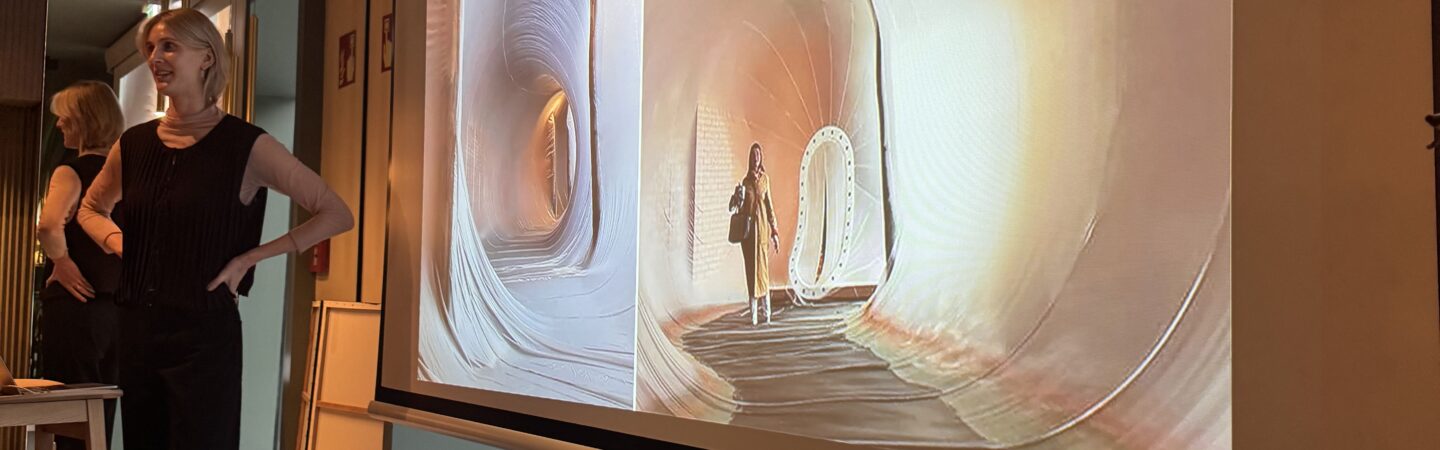
Written by Maia Berger, photos by Emilie Trochu
What happens to your heart rate when you stand before a masterpiece? Why do we lean in toward some canvases driven from somewhere within, while keeping a respectful distance from others?
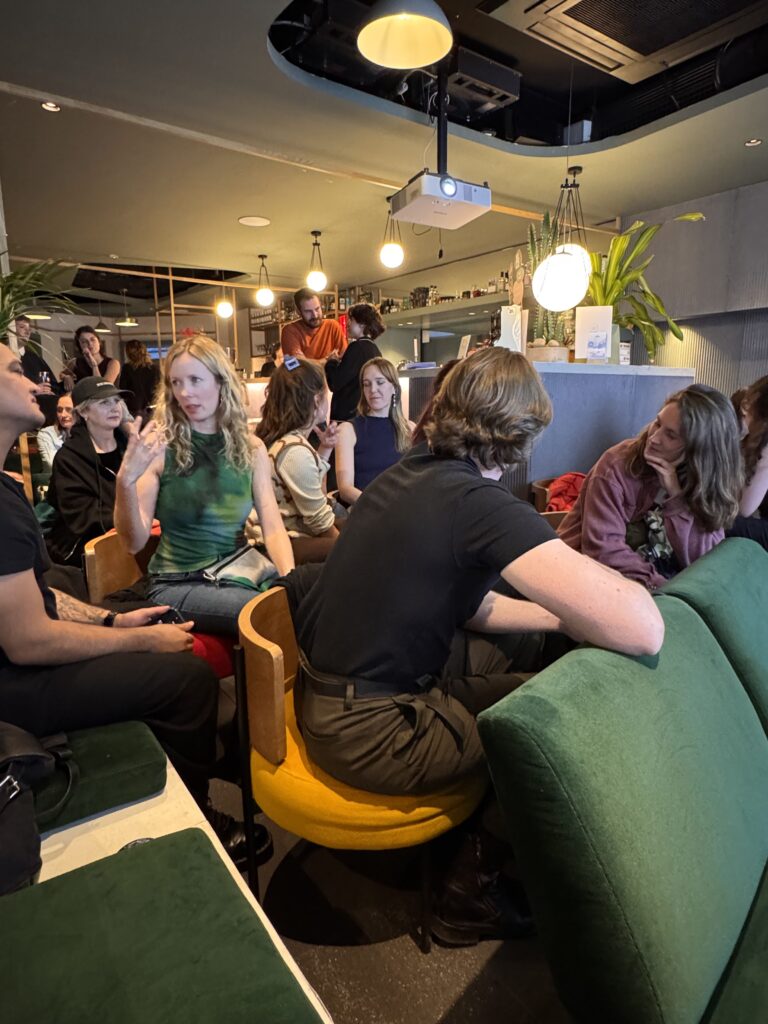
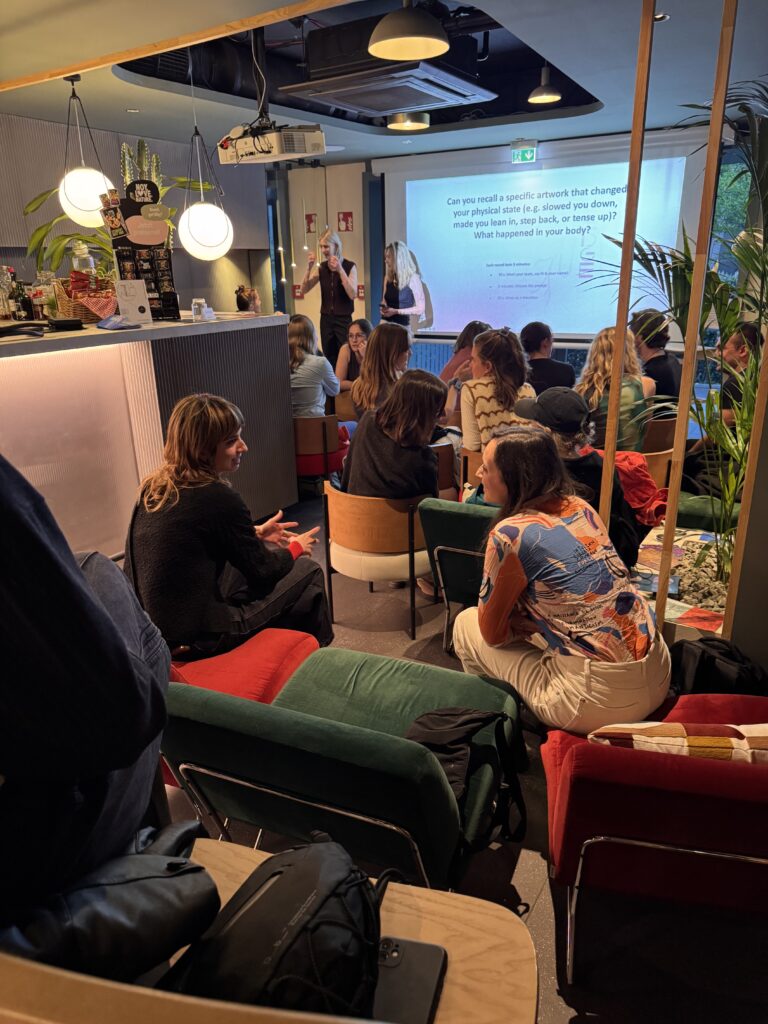
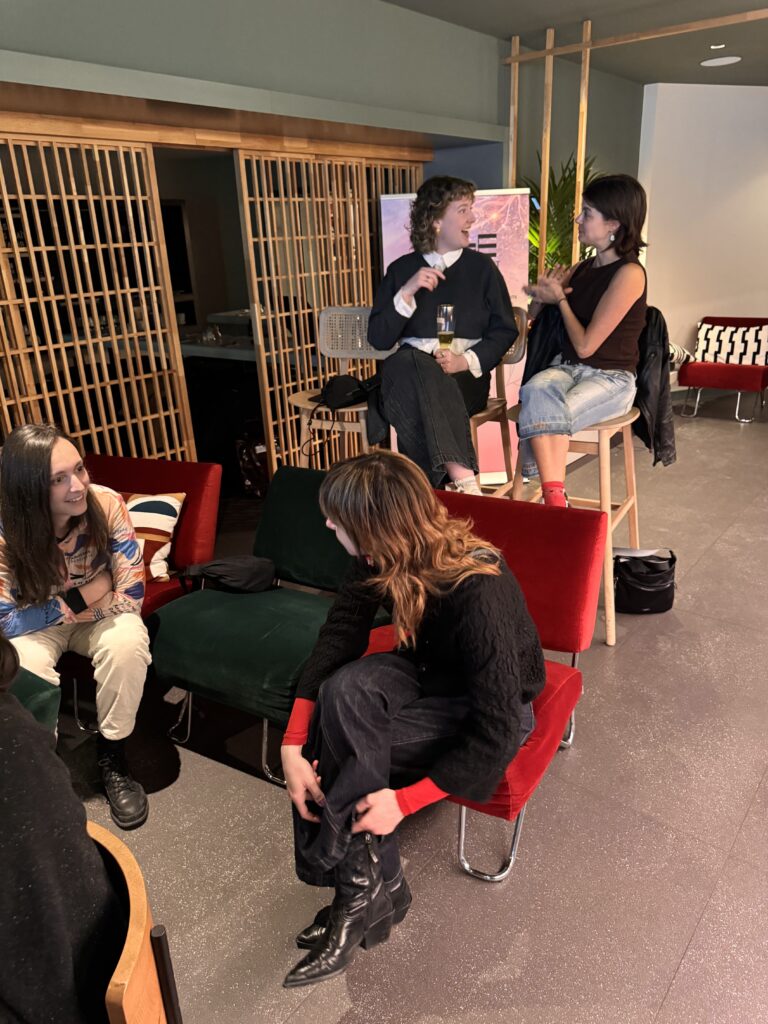
On Monday, April 27th, 2026, the cozy, living-room-inspired space at Gat Point Charlie Hotel became a laboratory for these very questions. We gathered for “A Nexus on The Role of the Body in Art Experience”, an evening dedicated to the fascinating intersection of neuroscience, movement, and aesthetic emotion.
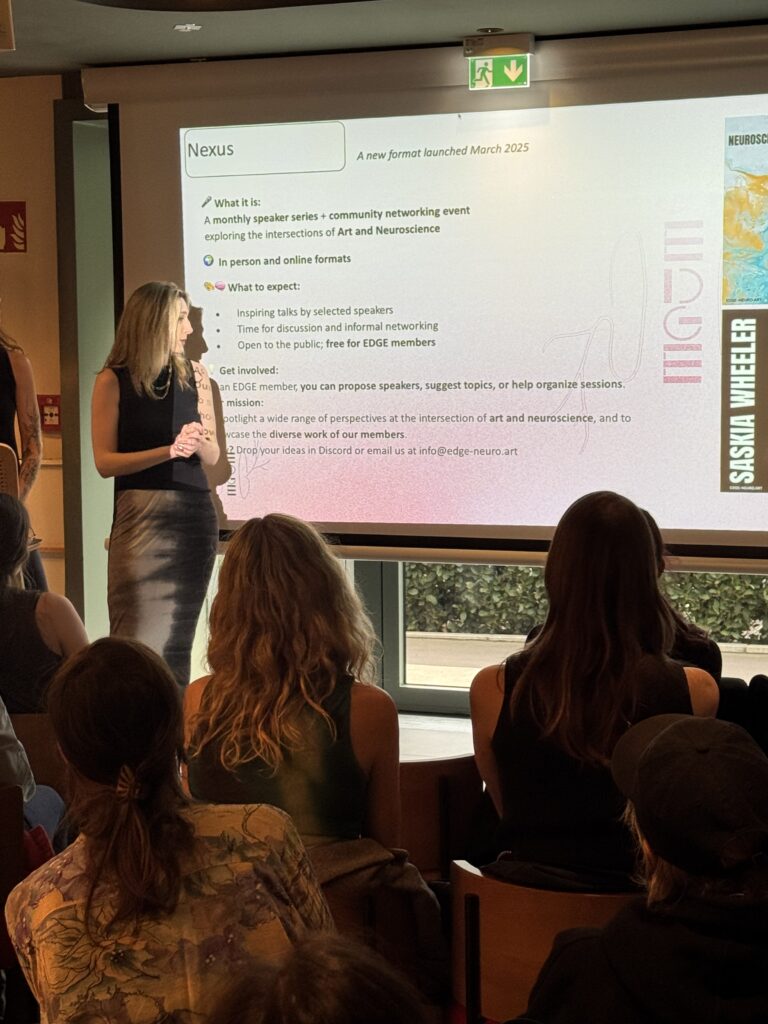
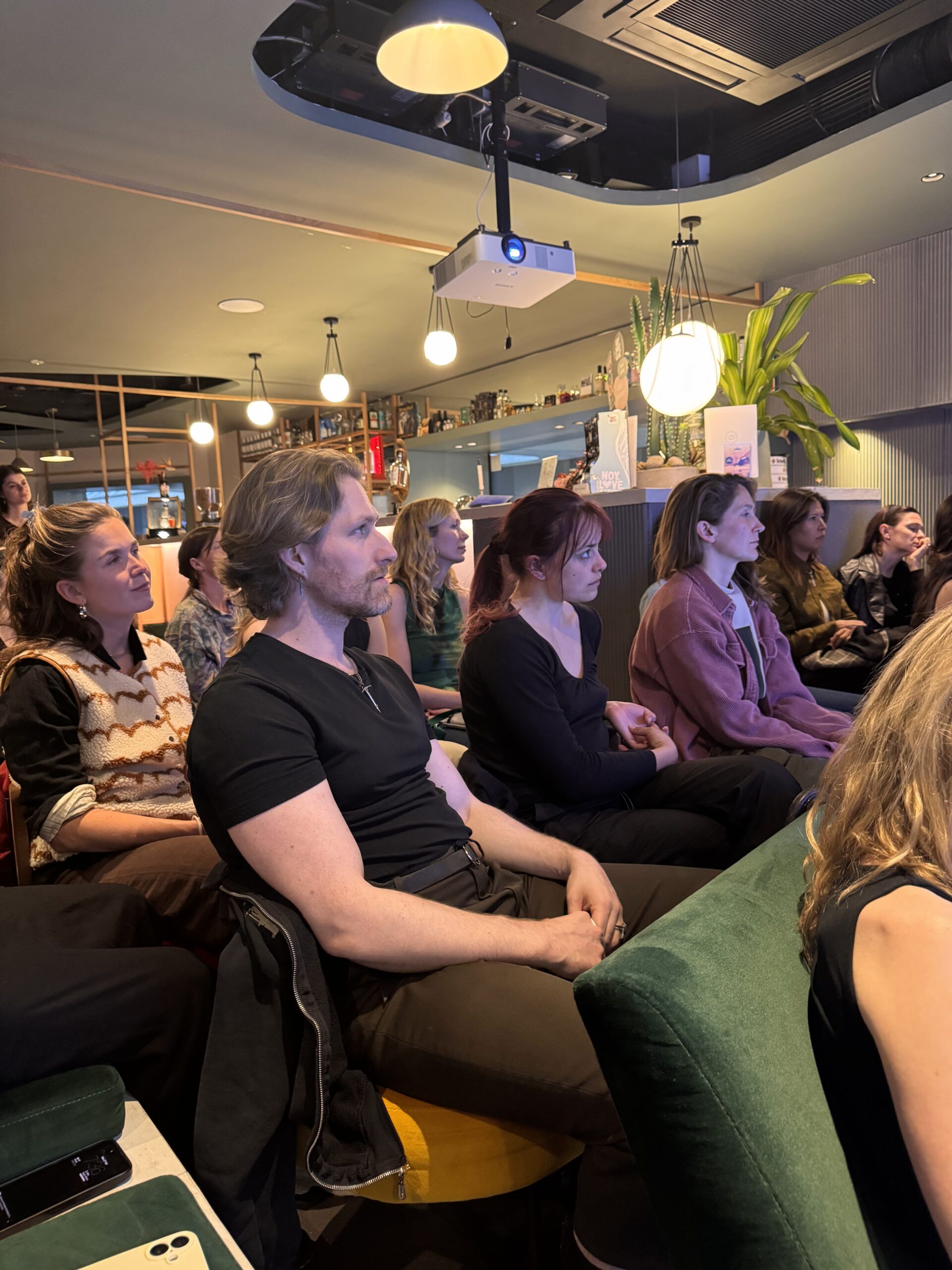
Starting from Within: The Embodiment Practice
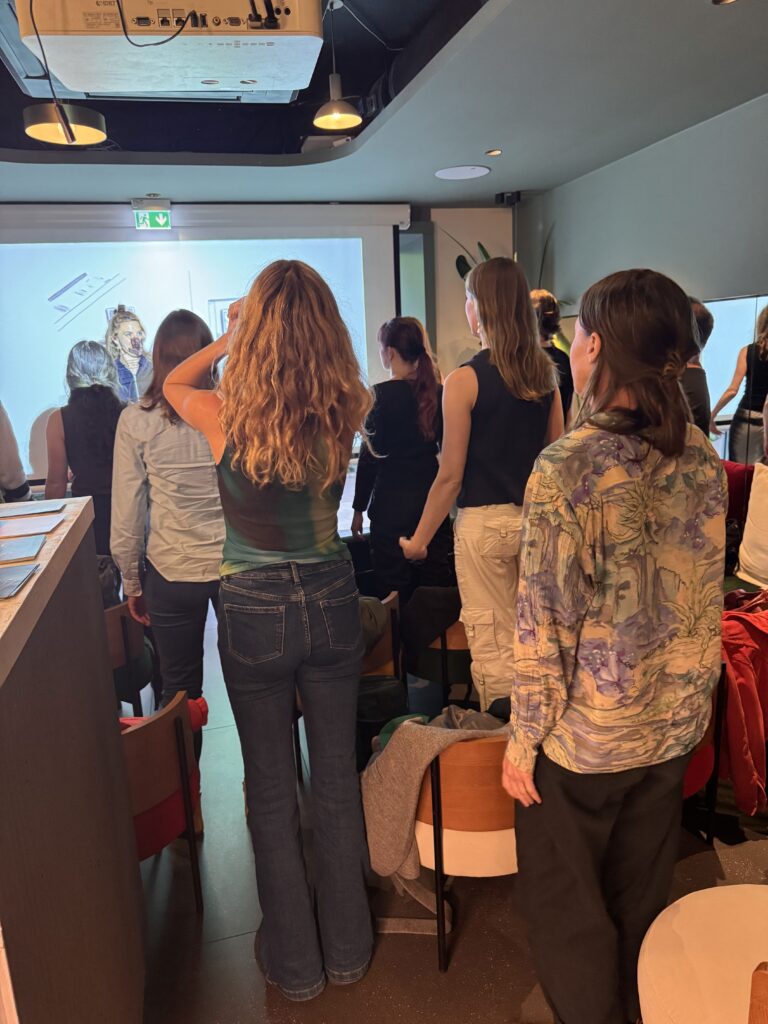
The evening began not with a lecture, but with a breath. Anca Katara, who is a rising force in Creative Leadership and Conscious Futurism, led the room through an embodiment practice designed to shift our focus.
In a world that constantly pulls our attention outward, Anca guided us to turn the lens inward. We focused on the rhythm of our lungs and the “inner body”, grounding ourselves in the present moment. This transition was essential; to understand how the body experiences art, we first had to become aware of the body itself.
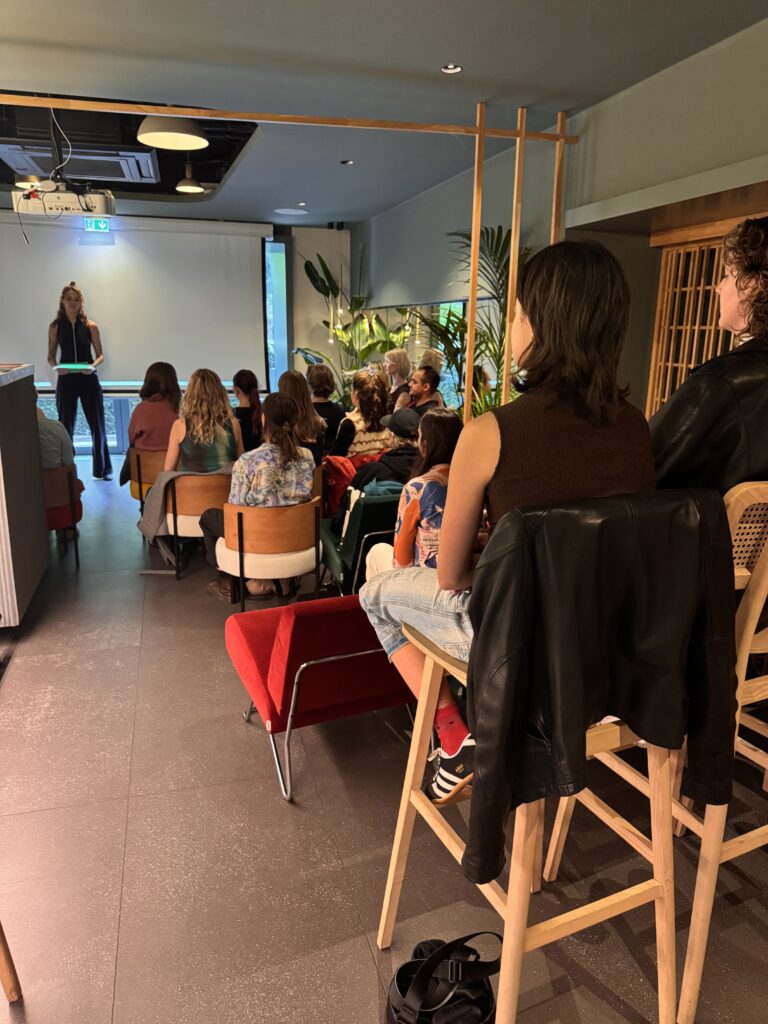
The Science of the “Inside Body”
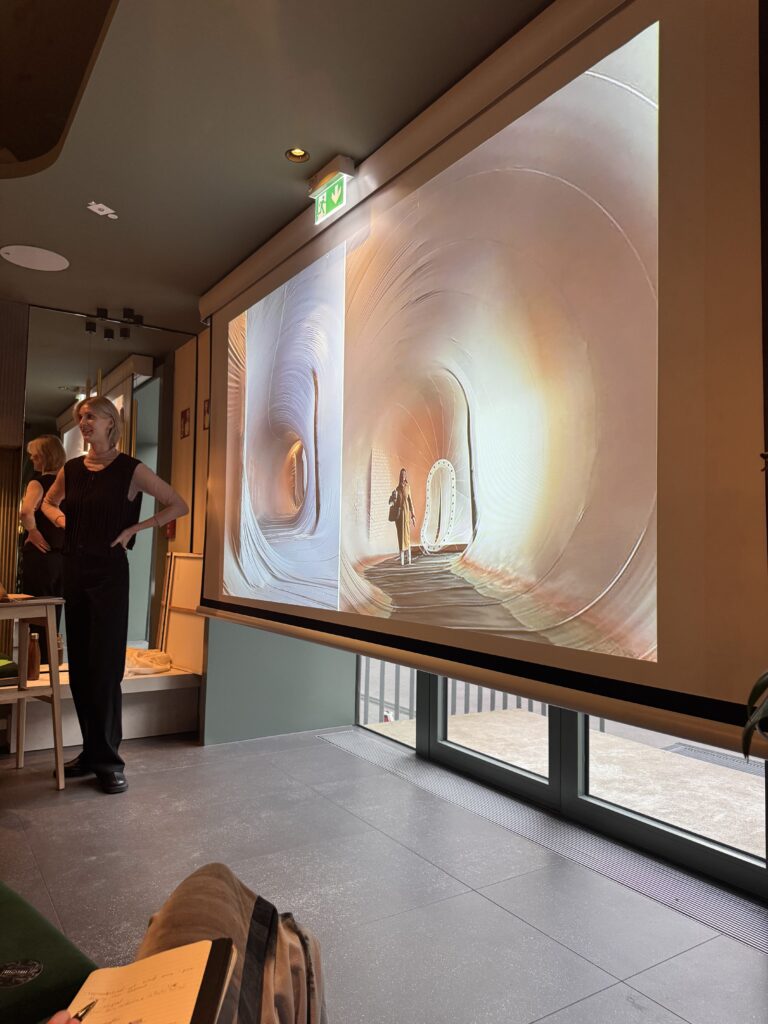
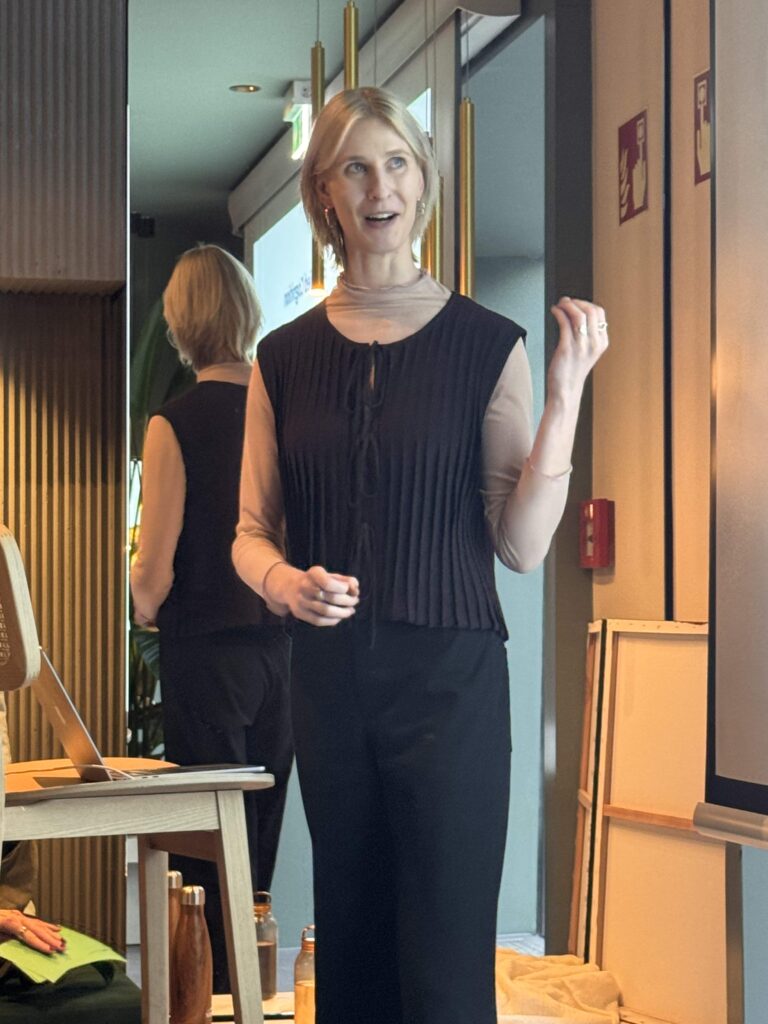
The floor was then handed to Dr. Corinna Kühnapfel, who presented the research from her PhD. She challenged the traditional view that art is a purely “visual” or “intellectual” pursuit, arguing instead that our physiology is the silent architect of our aesthetic experience.
Key Insights from the “Inside Body”:
- The Heart of the Matter: Dr. Kühnapfel shared findings showing that representational art (works featuring human figures or scenes) often triggers stronger physiological engagement than abstract art. Specifically, these works elicit a heart rate deceleration – a sign of deep, focused engagement.
- Interoception: Our ability to perceive internal signals like our heartbeat. Interestingly, people with higher “interoceptive accuracy” reported stronger emotional responses to art.
The “Moving Body” and Spatial Engagement
The talk then shifted from our internal organs to how we navigate space. Using mobile eye-tracking and movement sensors, research found that while we might look at a painting similarly, we’ll move around it very differently.
“Closer viewing distance and more active engagement were associated with higher ratings of insight, meaning, and emotional engagement, suggesting that how viewers move and position themselves in space shapes how deeply artworks affect them.”
High-Stakes Art: In Orbit
The most visceral part of the presentation focused on Tomás Saraceno’s in orbit, a massive steel net installation suspended high above the ground at the K21 museum. Visitors here reported:
- Altered perceptions of gravity and balance.
- Feelings of floating vs. feelings of disturbance/instability.
- A direct link between “unsettling” sensations and transformative experiences.
Dr. Kühnapfel argued that even discomfort can be a bridge to a shift in perspective. When art challenges our physical safety or balance, it forces us to think (and feel) differently.
Putting Theory into Practice
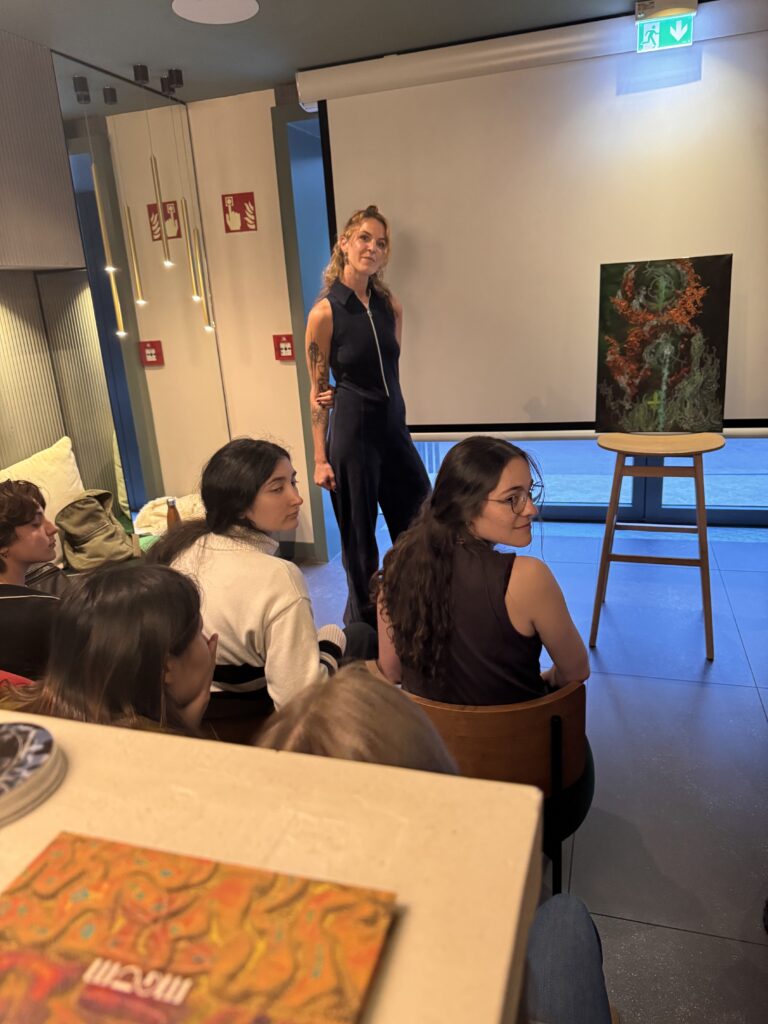
To close the session, Anca Katara returned with an original painting of her own. She invited the audience to apply Corinna’s research in real-time.
The room transformed into an interactive playground. Guests were encouraged to break the “museum rules”:
Check-in: Noticing if their breath hitched or if their posture shifted.
Move: Observing the work from across the room versus inches away.
Senses: Touching the textures and even smelling the canvas.
The Atmosphere
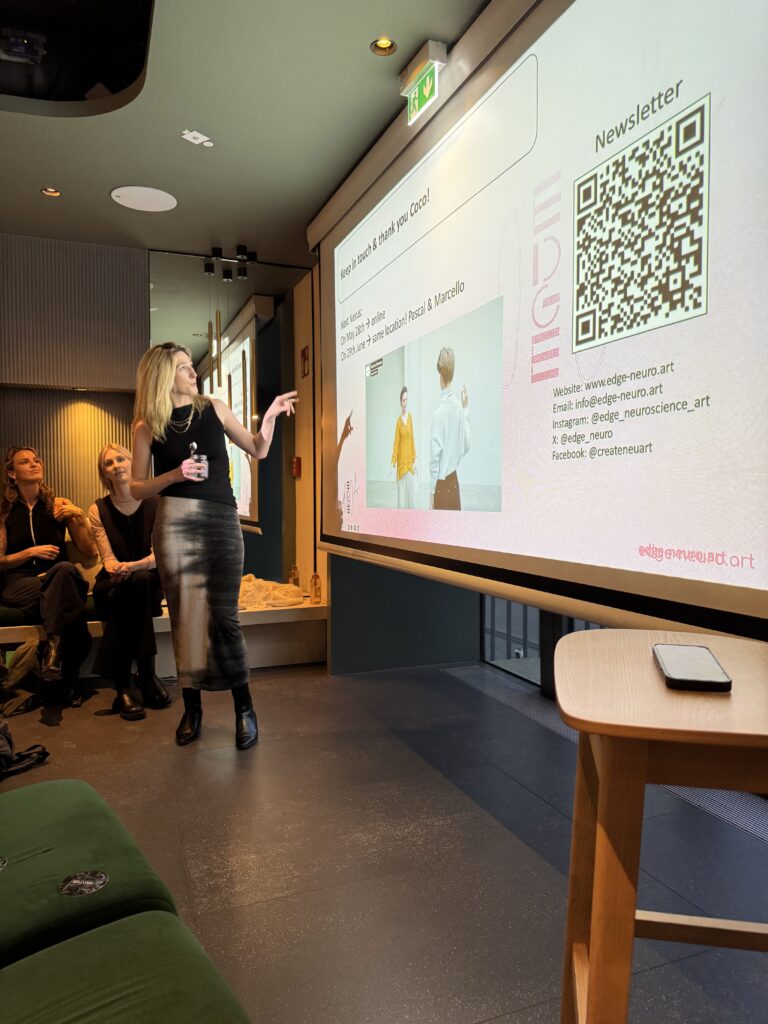
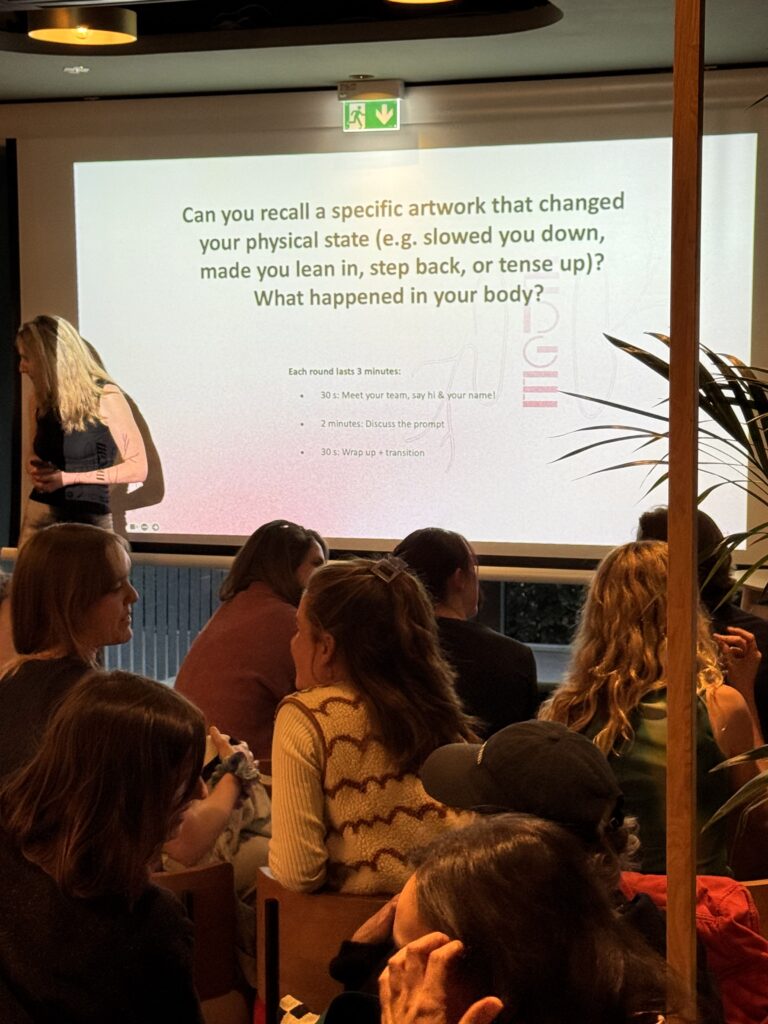
The following Q&A was an exciting dialogue between participants and speakers. The event then turned from a speaker session into into a open space for informal sharing and genuine connection in the guided networking session. We heard deep dives into neuroscience and connections were made across disciplines, united by a shared wonder at what it means to be a “feeling human” in the presence of beauty!
Want More?
Missed this NeuroArt Nexus? We have another one coming up on the 8th of July 6:00 pm at Gat Point Hotels, check out the upcoming session on Critical Care, Neuroscience, and Music with data scientist, critical care nurse, and artist Soraia Tomás. Event is free for EDGE members. Our April event sold out, so be sure to get your tickets early!